
TLDR
Sustainable weight loss comes down to a calorie deficit, enough protein, consistent movement, and habits you can actually stick to. No crash diets. No extreme restriction. These 10 science-backed tips give you the exact framework to lose weight and keep it off.
Table of Contents
- Understand the Calorie Deficit
- Prioritize Protein at Every Meal
- Meal Prep Your Way to Success
- Lift Weights to Burn More Fat
- Fix Your Sleep First
- Drink More Water Than You Think You Need
- Stop Relying on Cardio Alone
- Track What You Eat (Even Loosely)
- Build a Routine, Not a Perfect Diet
- Choose Consistency Over Perfection
If you’ve spent time searching for weight loss tips, you already know the internet is full of conflicting advice. Eat less. Eat more. Do fasted cardio. Skip breakfast. Drink this tea. The noise is exhausting.
The truth? Weight loss is simpler than the wellness industry wants you to believe. It runs on a few core principles, and when you apply them consistently, results follow. Here are 10 tips that are actually backed by science — no gimmicks, no starvation.
1. Understand the Calorie Deficit

Photo: Unsplash
A calorie deficit is the foundation of every weight loss approach that works. When you consume fewer calories than your body burns, it taps into stored fat for energy.
A deficit of around 500 calories per day produces roughly 1 pound of fat loss per week — a safe, sustainable rate that most adults can maintain without losing muscle or energy. Mayo Clinic and the CDC both recommend 1-2 pounds per week as the target pace for lasting results.
QUICK TIP
Use your current weight x 11 (women) or x 12 (men) to estimate your maintenance calories, then subtract 300-500. That’s your starting deficit. Source: Sutter Health
2. Prioritize Protein at Every Meal
Protein is the most powerful weight loss nutrient available. It keeps you full longer, protects your muscle mass during a calorie deficit, and has a higher thermic effect — meaning your body burns more calories just digesting it.
Research from NASM recommends 0.7 to 1 gram of protein per pound of bodyweight per day for people actively trying to lose fat. For a 160-pound woman, that’s 112-160g of protein daily.
High-Protein Foods to Build Meals Around
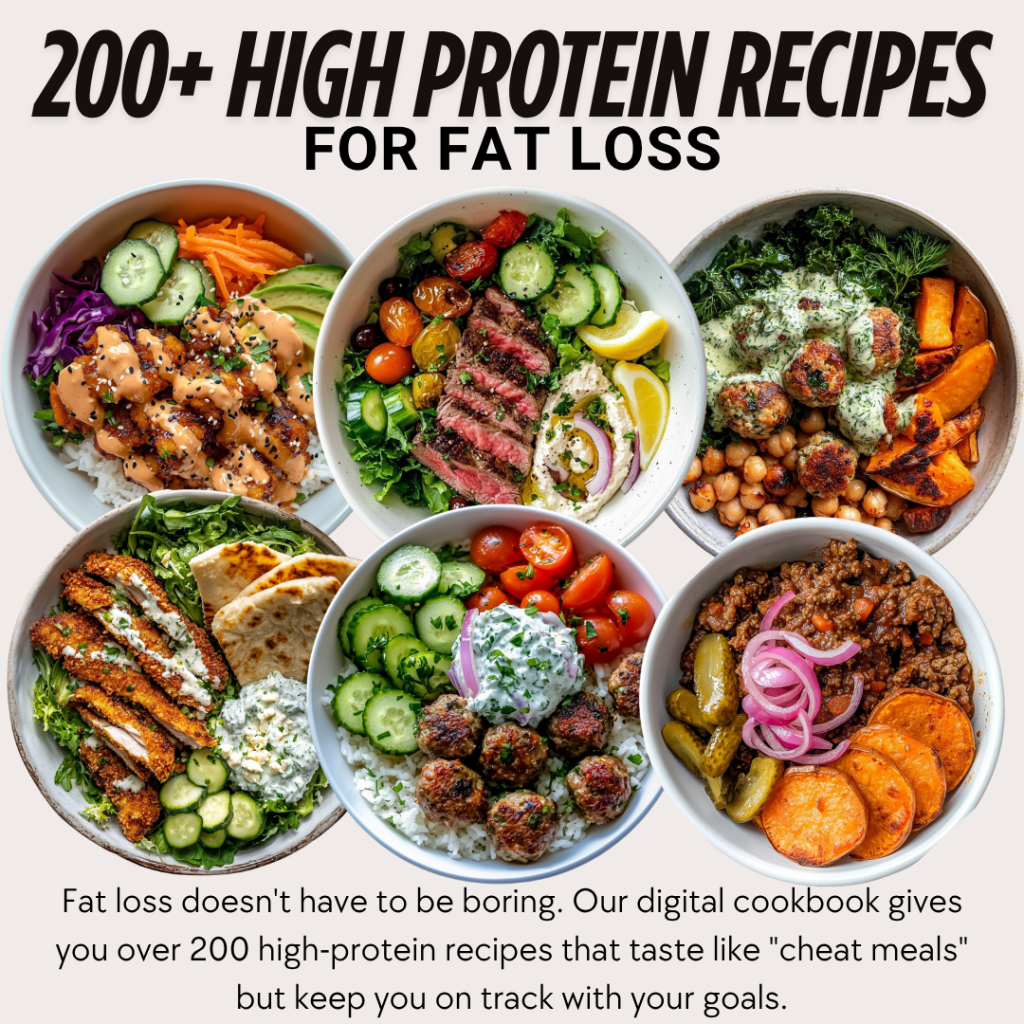
Need help hitting your protein goals?
200+ macro-tracked, high-protein recipes for fat loss — all organized and meal-prep friendly.
3. Meal Prep Your Way to Success

Photo: Unsplash
The biggest reason people fall off their diet isn’t willpower — it’s convenience. When you’re tired and hungry at 7pm, you eat whatever is fastest. Meal prepping removes that decision entirely.
According to Healthline, meal prepping supports weight loss most effectively when you build meals around whole, minimally processed foods with protein, fiber, and healthy fats.
Simple Weekly Prep Routine
- Pick 1 protein source, 1 carb, and 2 vegetables
- Cook in bulk on Sunday
- Portion into containers for 4-5 days
- Add variety with sauces and seasonings
Start small. Two or three prepped meals per week is enough to see a noticeable difference in how consistently you eat well.
4. Lift Weights to Burn More Fat

Photo: Unsplash
Most people default to cardio when they want to lose weight. Cardio burns calories during the session, but strength training changes your body composition permanently.
When you build lean muscle, your resting metabolic rate increases — meaning you burn more calories at rest, 24 hours a day. Muscle is metabolically expensive tissue. More of it means a higher baseline calorie burn, making your deficit easier to maintain.
Aim for 2-4 strength sessions per week. Compound movements — squats, deadlifts, rows, presses — give you the most return per session. Forty-five focused minutes is enough.
5. Fix Your Sleep First

Photo: Unsplash
Sleep is the most underrated weight loss tool. When you don’t get enough, your body produces more cortisol (the stress hormone), which increases fat storage — especially around the abdomen. Poor sleep also raises ghrelin (the hunger hormone) and suppresses leptin (the fullness hormone), making you hungrier all day.
UC Davis Health includes adequate sleep as a core pillar of sustainable weight loss. Seven to nine hours per night is the target for most adults.
Sleep Habits That Support Fat Loss
- Consistent bedtime and wake time (even weekends)
- No screens 30-60 minutes before bed
- Cool, dark room
- Cut caffeine after 2pm
6. Drink More Water Than You Think You Need
Thirst and hunger use the same signaling pathways in the brain. Many people reach for food when their body actually needs water. Staying consistently hydrated reduces unnecessary snacking and supports every metabolic process involved in fat loss.
Daily target: Half your bodyweight in ounces. For a 160-pound person, that’s 80oz — roughly 10 cups. Drinking 16oz before each meal also reduces calorie intake at that meal.
7. Stop Relying on Cardio Alone
Cardio has its place — it improves cardiovascular health, burns calories, and reduces stress. But cardio alone has a ceiling. Your body adapts quickly, and many people compensate for cardio by eating more.
The most effective approach combines strength training with moderate cardio. Think 3-4 lifting sessions plus 2-3 cardio sessions of 20-30 minutes per week. And don’t underestimate walking — 8,000-10,000 steps per day contributes significantly to your daily calorie burn without the recovery demand of intense cardio.
8. Track What You Eat (Even Loosely)
Research consistently shows that people who track their food intake lose more weight than those who don’t — simply because awareness changes behavior. You don’t need to log every gram forever, but tracking for even 2-4 weeks builds a mental map of your eating patterns.
Common mistakes people catch once they start tracking:
- Underestimating portion sizes
- Forgetting liquid calories (coffee drinks, juice, alcohol)
- Not accounting for cooking oils and sauces
Apps like MyFitnessPal or Cronometer make tracking fast. Even a rough estimate beats no awareness at all.
9. Build a Routine, Not a Perfect Diet
The most effective diet is the one you follow consistently for months, not the one that’s theoretically optimal. Rigid, all-or-nothing approaches fail because life is unpredictable.
Build Your Flexible Routine Around:
- Same meal times each day
- A go-to list of 10-15 meals you enjoy that fit your goals
- A plan for eating out that doesn’t derail progress
- Permission to have treats without guilt
Want a done-for-you 12-week structure?
Workouts, nutrition guidance, and meal frameworks — all built out for you.
10. Choose Consistency Over Perfection
One bad meal doesn’t break a diet, just like one good workout doesn’t transform a body. Progress comes from what you do most of the time, not what you do occasionally.
The people who succeed long-term aren’t the ones who never slip — they’re the ones who don’t let a slip turn into a week off. They get back on track at the next meal, not the next Monday.
“Lasting weight loss requires sustainable lifestyle changes, not a perfect streak.” — Mayo Clinic
The Bottom Line
Effective weight loss tips all point to the same foundation: a moderate calorie deficit, high protein intake, consistent strength training, quality sleep, and habits you can actually sustain. There’s no shortcut that bypasses these fundamentals — but when you apply them together, the results are real and lasting.
Ready to put it all together?
The 2026 Transformation Bundle gives you a complete 12-week system with workouts, meal plans, and coaching frameworks — everything you need to start seeing results this week.
Get the 2026 Transformation Bundle →
One-time payment · Instant digital download · 4.9 star rating
Sources: Mayo Clinic | CDC | NASM | Healthline | UC Davis Health | Sutter Health
Leave a Reply